Compatibility / beginner guide

Smart lighting starts with the light, then the control path.

Start with the result you want to see. Then match the light engine, power, driver and smart-home route around it.

Simple system model

Light source + control + power / driver + housingTechnical status shown per item

Start with the light, then choose the control path.

Smart lighting is a system of jobs: a physical light engine, a control path, power and a mechanical finish. The light engine determines whether you can make pixels, RGBW, CCT or simple white light. A driver supplies or regulates power; a controller sends data, PWM or driver commands; the app sits above that hardware.

Use WLED for compatible addressable LED strips and effects, Zigbee for many everyday dimming and CCT systems, Matter for certified cross-platform devices, Tuya for an app-first ecosystem, and Home Assistant for automation above a working lower-level path. None of those names replaces the physical light, driver or power design.

Important boundary: WLED is firmware and a control interface that runs on a compatible controller. Zigbee, Matter and Tuya describe communication or ecosystem paths; they are not automatically the LED driver. Confirm the exact SKU, variant, voltage, LED IC, channels and gateway or coordinator path.

Light source Smart control Power / driver Housing
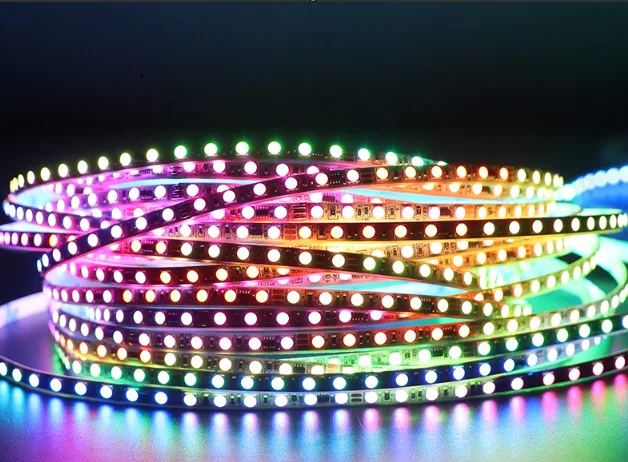
Addressable LED strip used as a physical light-source example
01 / LIGHT SOURCE The part that makes light

A strip, neon flex, module or fixture decides the available colors, channels, pixels and cut points.

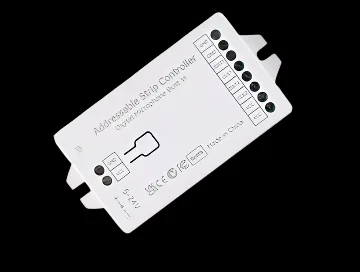
LED controller board used as a smart-control example
02 / SMART CONTROL The part that gives commands

A controller, smart driver or fixture interface turns an app or automation command into data, PWM or driver output.

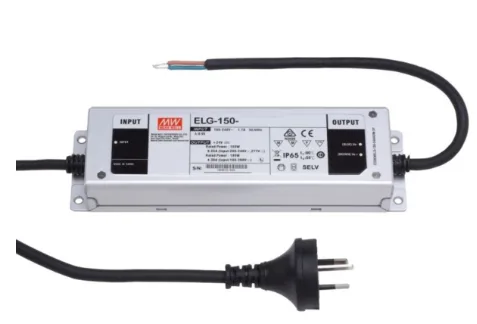
Low-voltage LED power supply used as a power and driver example
03 / POWER / DRIVER The part that makes it run

A supply and driver provide the required voltage or current with suitable capacity, protection and heat management.

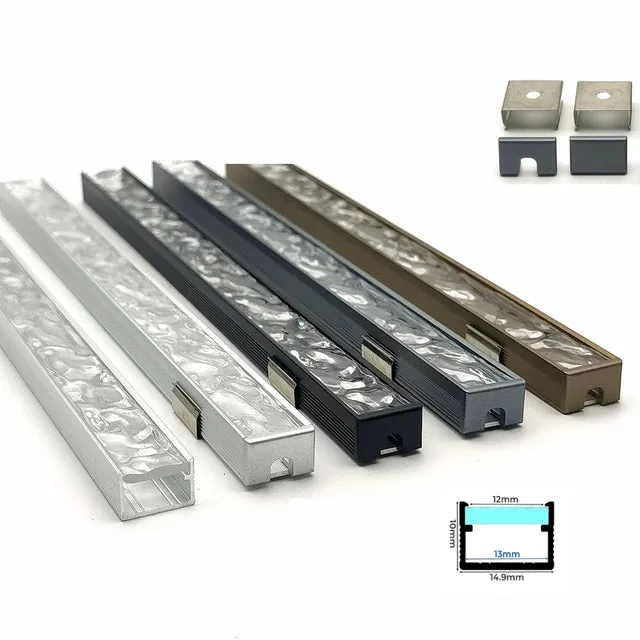
Aluminum LED profile used as a housing and diffuser example
04 / HOUSING The part that finishes the installation

A profile, diffuser or fixture body manages heat, hides dots and keeps the finished system serviceable.

Electrical first. A kit may hide the power supply and driver inside the box, but a reliable system still needs the correct voltage, load rating, cable, protection and heat path. Mains-voltage work should be handled by a qualified installer.

Have a lighting idea in mind but not sure which parts will work together? Tell us what you want to build, where it will go and what hardware you already have. We will help verify the light source, voltage, LED IC or channel count, controller, driver, power supply, wiring and control path, then match a practical DIY smart-lighting setup before you buy. This pre-purchase review is included at no extra charge, so you can order with confidence and start building when your parts arrive.

There is no single winner. Choose by the job.

Start with the visible result: moving pixels, comfortable white light, a familiar phone app, cross-platform commissioning or a custom automation system. Then choose the control path that can actually drive the light engine you selected.

Value is conditional. Zigbee plus Home Assistant is a strong value route for everyday white light or CCT when you accept a host, coordinator and maintenance. WLED is the direct value route for addressable effects. The right answer changes with the light and the project.

Conditional value: This is a relative system-cost guide, not a public price list. Compare the light, driver, controller, coordinator or hub, Home Assistant host, wiring, installation time and ongoing maintenance together.

Which sentence sounds like your project?

Choose the route by the job it must do. The cards below explain the physical light, the control chain and the boundary that still needs exact-product validation.

What matters most for this build?

Zigbee + Home Assistant

BEST VALUE / EVERYDAY LIGHTING

A strong default for dimming, tunable white and a growing local-first home when you are willing to run Home Assistant.

Complete stack: Light / driver -> Zigbee -> coordinator -> ZHA or Zigbee2MQTT -> Home Assistant

Best for
CCT, downlights, room lighting and many devices
System cost
High value when a Home Assistant host already exists
Needs
Home Assistant host, one Zigbee coordinator and an exact supported device definition.

Tradeoff: You own the host, backups, pairing and mesh placement. It is not the simplest path for zero maintenance, and it is not the output path for per-pixel effects.

Open the Zigbee path
Conditional comparison of complete lighting control stacks
ProfileBest forRelative system costSetup / upkeepLocal controlExtra pieces
01Zigbee + Home Assistant BEST VALUE / EVERYDAY LIGHTING CCT, downlights, room lighting and many devices High value when a Home Assistant host already exists Medium setup / medium upkeep Local after the coordinator and integration are working Home Assistant host, one Zigbee coordinator and an exact supported device definition.
02WLED + optional Home Assistant BEST VALUE / EFFECTS Addressable RGB/RGBW strips, pixels and displays High value for effects; power and wiring dominate the budget Medium setup / medium upkeep Local over the controller network Addressable light, exact LED IC profile, WLED-capable controller, power supply and tested wiring.
03Matter + Apple Home BEST FIT / APPLE HOME Apple Home users who prioritize commissioning and ecosystem sharing Medium; depends on the device, transport and Apple hub already owned Low to medium setup / low to medium upkeep Local device control; controller and Thread requirements vary An exact Matter-certified device. Thread variants also need a compatible Thread Border Router; hub requirements depend on the Apple setup.
04Tuya Smart / Smart Life BEST FIT / FAST APP SETUP Simple consumer setup, vendor scenes and familiar phone control Often low upfront; long-term control depends on the product path Low setup / medium dependency Cloud or gateway behavior depends on the exact device The exact Tuya device, correct app and region, account, and any required gateway or internet connection.
05ESPHome + Home Assistant BEST FIT / CUSTOM HARDWARE Custom hardware, prototypes and YAML-first Home Assistant builds High hardware value; high time cost High setup / high upkeep Local through the native Home Assistant API Compatible microcontroller, firmware configuration, enclosure, power design and repeatable flash/recovery path.
06DALI / DMX / wired BEST FIT / COMMERCIAL WIRED CONTROL Commercial, architectural and show-control installations Higher hardware and engineering cost; can be the right project value High setup / low radio uncertainty Local and wired, with project-specific commissioning Matching driver/decoder, bus wiring, addressing plan, termination where required and a controller or gateway.
How to read valueThis is a relative system-cost guide, not a public price list. Compare the light, driver, controller, coordinator or hub, Home Assistant host, wiring, installation time and ongoing maintenance together.

What do you want the light to do?

Start with a visible outcome instead of a protocol name. The same word, such as RGB or smart, can describe very different electrical systems.

Start with the light result, then choose the control path
GoalLight engineControl hardwareWhat it can doCheck first
Moving colors or effectsAddressable / pixel light Addressable RGB or RGBW strip, pixel module or pixel tube. Each pixel receives data. A WLED-capable controller running WLED firmware over local Wi-Fi. Pixels, segments, presets and effects can be controlled independently. LED IC such as WS2812B or SK6812, data direction, color order, pixel count, voltage and power injection.
Only brighter or darker whiteSingle-color light A single-color white strip, module or fixture. A matched single-channel PWM driver/controller, or the fixture specified constant-current driver. Simple on/off and smooth brightness control for task or accent light. Light voltage, load current, driver rating and whether the run is low voltage.
Warm-to-cool white and dimmingTunable white / CCT A CCT light with separate warm-white and cool-white channels. A two-channel CCT driver or controller using a Zigbee, Matter or Tuya path. Brightness plus a warmer or cooler white balance for everyday rooms. CCT range, CRI, channel wiring, driver type and Zigbee gateway requirement.
Color across the whole runAnalog RGB / RGBW A non-addressable RGB or RGBW strip with shared color channels. A multi-channel PWM controller and a driver stage rated for the strip current. The connected run changes color together; it does not provide per-pixel effects. Channel count, current rating, common polarity and the controller wiring diagram.
A finished downlight or fixtureIntegrated light engine A downlight, panel, spotlight or linear fixture with optics and housing included. The exact built-in or matched driver/controller variant, plus its gateway if needed. A simpler installation when the complete fixture path has already been validated. Mains or low voltage, driver access, reset method, certification and exact smart path.
Want both?Use separate zones when everyday white light and animated effects are both important. A single RGB+CCT or RGBW product can do more, but its channel count, driver and controller become more complex.

A smart light is several jobs working together.

For buying and building, make the home-control layer, smart hardware, light engine, power and mechanical finish visible as separate decisions.

Every layer has a different responsibility
LayerJobExamplesBeginner question
01Home / automation layer Where a person taps, schedules or combines lights with sensors and scenes. Home Assistant, Apple Home, Google Home, Tuya Smart or Smart Life app. Where will I control it, and does this layer need the internet?
02Smart control hardware Receives commands and turns them into data, PWM channels or driver commands. WLED controller, Zigbee CCT driver, Matter light or Tuya controller. Does this hardware speak to the exact light engine and voltage?
03Light engine The LEDs and channels decide whether the result is pixels, RGBW, CCT or white light. Addressable strip, analog RGBW strip, CCT tape, COB tape or fixture module. How many channels or pixels are there, and what can they physically do?
04Power and driver Supplies the voltage or current the light needs, with protection and enough headroom. 5/12/24 V DC supply, constant-current driver, fuse, cable and injection point. What is the load, and what happens at the far end of the cable?
05Housing and optical finish Holds the light, manages heat, hides dots and makes the installation serviceable. Aluminum profile, diffuser, end caps, fixture body, enclosure and cable access. Will it fit, stay cool and remain possible to repair after installation?

What do WLED, ESPHome, Zigbee, Matter and Tuya actually mean?

These names answer different questions. None of them, by itself, tells you the strip voltage, LED quality, housing, power capacity or exact compatibility of a finished product.

Choose a control route after the light engine is known
NameWhat it isGood fitBoundary to remember
WLED Firmware and control interface on a compatible controller. Addressable pixels, segments, presets and animated effects. It does not define strip voltage or prove the LED IC. Match the controller, data pin, power and strip profile.
ESPHome Configuration-oriented firmware with a native Home Assistant API. Custom boards, sensors and fixtures where the builder owns YAML and I/O mapping. It is a firmware path, not a ready-made light engine. Pin mapping, recovery, power and the exact component still need testing.
Zigbee A low-power mesh network used by many smart drivers and lights. Everyday on/off, brightness and CCT in a local mesh. A Zigbee coordinator or gateway is required. ZHA, Zigbee2MQTT and Tuya Gateway are separate validation paths.
Matter A cross-ecosystem control standard over a local IP network such as Wi-Fi or Thread. Certified lights that should be shared across supported smart-home platforms. Use a certified Matter device and Matter controller. Thread devices need a border router, and Thread alone is not Matter proof.
Tuya An app and cloud ecosystem for Powered by Tuya devices. Fast app-based setup, scenes and a familiar consumer workflow. The device must be added to Tuya Smart or Smart Life. Internet, account, region and cloud feature mapping can matter.
Home Assistant An automation and orchestration layer, not a light driver. Schedules, sensors and one dashboard across WLED, Zigbee, Matter, Tuya and other paths. A lower-level device path must work first. Home Assistant cannot replace the driver, power supply or coordinator.
DALI / DMX Wired control buses for project-specific drivers, groups and show-control systems. Commercial, architectural and professional installations with a defined commissioning plan. Bus wiring and addressing do not prove the light engine or driver. Validate the exact decoder, termination and control boundary.

Six decisions are enough to start.

You do not need to understand every protocol before choosing a light. Follow this order and keep each decision attached to the exact variant you plan to buy.

  1. 01
    Name the result

    Effects, dimming, warm/cool white, a finished fixture or a combination.

  2. 02
    Choose the light

    Addressable, analog RGBW, CCT, single-color or an integrated fixture.

  3. 03
    Record the electrical facts

    Voltage, watts or current, channels, cut interval and the planned cable length.

  4. 04
    Choose the control hardware

    The output type must match the light: data, PWM, CCT channels or a fixture driver.

  5. 05
    Choose the smart route

    WLED, Zigbee, Matter, Tuya or Home Assistant after the physical path is known.

  6. 06
    Bench-test, then finish

    Test a short section, add protection, install the profile and keep service access.