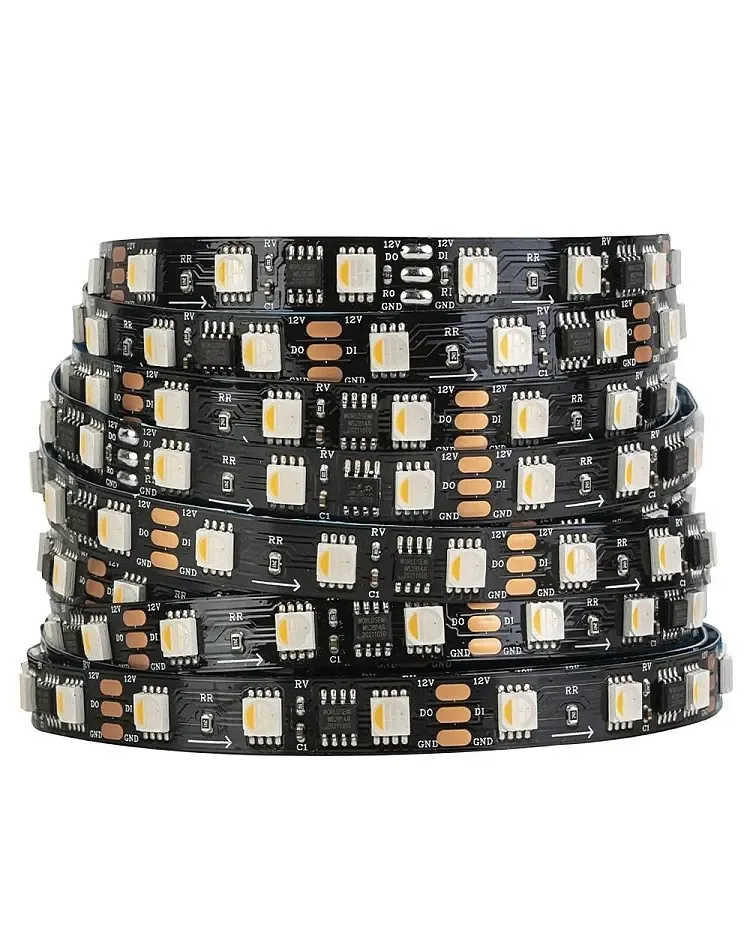
01 / Short answer
Choose the installation boundary and the lighting job first. Voltage, IP rating, density, control and power are a system decision, not separate shopping filters.
Anyone selecting strip lighting for a room, cabinet, display or exterior detail
CHECKPOINT / 01
Start with the place, not the strip name
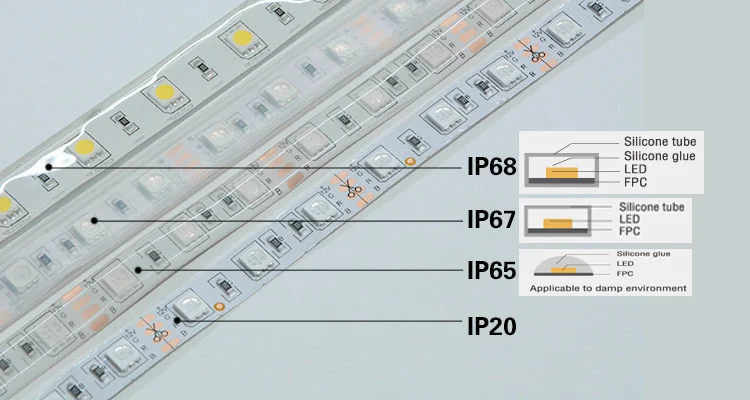
Write down whether the strip will stay dry, see occasional splashes, sit outdoors or be exposed to immersion. An IP number describes a tested enclosure condition, not the whole installation. End caps, cable entries, joints, connectors and the power supply must support the same boundary. A coated strip inside a wet location is not automatically an outdoor system.
- Dry concealed interiors can use an uncoated strip when the mounting surface is suitable.
- Splash-prone locations need a matching strip, sealed ends and a serviceable power entry.
- Treat any submerged or high-exposure installation as a complete engineered assembly.
CURRENT PRODUCT RECORDS
24 V WS2814 RGBW addressable LED strip View productCHECKPOINT / 02
Define the light job and the viewing angle
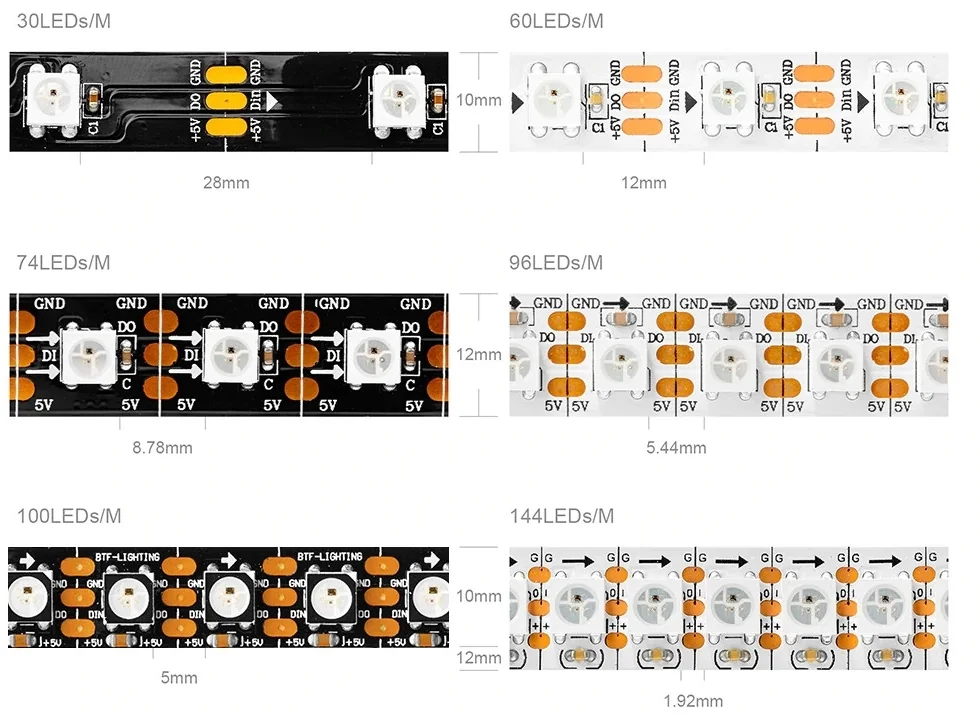
Separate everyday visibility from atmosphere. Task lighting needs useful white output, acceptable color quality and controlled glare. Accent lighting can trade output for a narrow or decorative beam. Animated RGB or RGBW light is an effects layer; it should not be assumed to replace comfortable work light. Density, watts per metre and lumens per metre describe different parts of the decision, so ask for the exact variant data instead of choosing from LED package size alone.
- Record whether the strip is direct-view, concealed, reflected or inside a diffuser.
- Use CCT and CRI as separate requirements; a color label does not prove either one.
- Plan a thermal path for high-density or high-output tape.
CHECKPOINT / 03
Match voltage, run length and cut interval
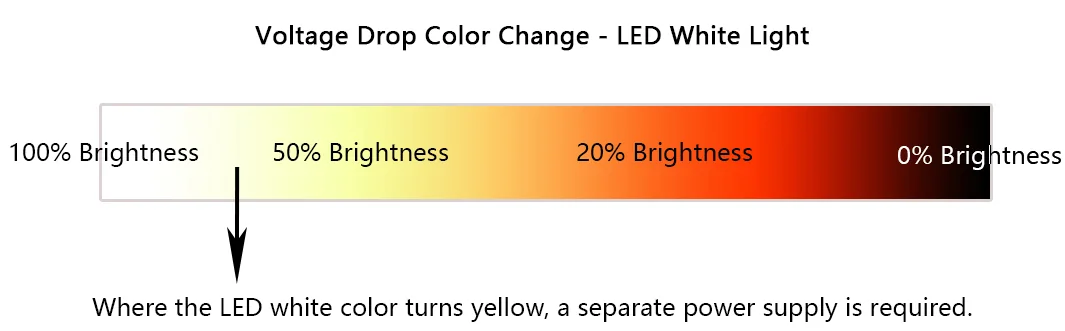
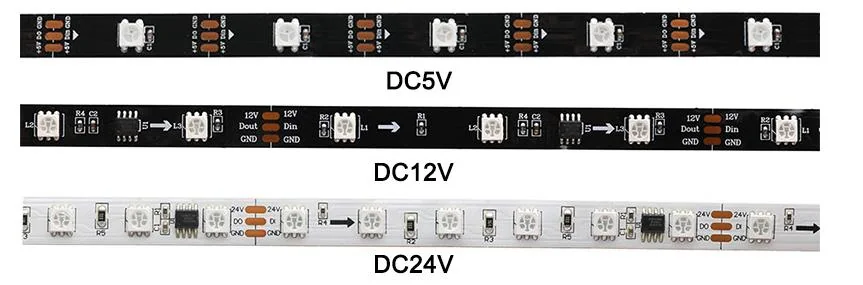
For a long architectural run, a higher-voltage low-voltage strip can reduce current in the conductors and make voltage drop easier to manage. It does not remove the need to check the manufacturer run limit, copper width, connector resistance and injection plan. Lower-voltage addressable strips can offer finer cut intervals, but they usually demand more current and a more deliberate power layout. Never join strips with different operating voltages or assume that the arrow, connector or cut spacing is universal.
- Confirm the supply voltage at the strip and at every branch.
- Measure the planned length before ordering; include bends, service loops and connector allowances.
- Keep the cut mark, data direction and polarity visible on every loose section.
CURRENT PRODUCT RECORDS
24 V WS2814 RGBW addressable LED strip View productCHECKPOINT / 04
Choose the control path after the light engine
A single-color or CCT strip normally uses a constant-voltage supply and a compatible PWM or CCT controller. An addressable strip adds a data protocol, a controller profile and a color/channel order. WLED is a useful local effects route when the exact IC and controller path are identified, but a product title or a similar-looking connector is not evidence of compatibility. Specify the light engine, controller, firmware target and recovery method together.
- Constant-voltage strip: match supply voltage and controller channel topology.
- Addressable strip: record IC, voltage, data input, color order and pixel or segment count.
- Zigbee or Home Assistant belongs to the documented controller path, not to the strip image alone.
CHECKPOINT / 05
Make the power calculation part of the purchase
Use the declared maximum watts per metre when available, multiply by the installed length and leave headroom. Then check current, cable size, connector rating, fuse branches, heat and access. A correctly sized supply can still fail to light the far end when a thin pigtail or a long copper run creates the voltage drop. Use a short sample to confirm the variant before cutting a full reel.
load_w = length_m * watts_per_m
supply_w >= load_w * 1.20
current_a = load_w / voltage_v
VISUAL REFERENCES
See the layers before you specify the parts.
FAILURE MODES
What usually goes wrong
- An IP rating is selected for the strip while the connector and power entry remain exposed.
- RGB output is used as the only room light and creates poor visibility or uncomfortable saturation.
- A long low-voltage run is powered through one small connector without a far-end measurement.
- A controller is selected from a protocol label before the exact IC, voltage and channel order are recorded.
- The power supply is sized from nominal length and average brightness instead of the declared maximum load.
TECHNICAL BASIS / VERSION
Keep the decision current
This guide is maintained as a versioned technical record. Recheck the current protocol documentation and the exact product revision before using it in a production installation.
Confirm the selected voltage, light engine, driver, controller, firmware and installation conditions against the product record and project brief.
FAQ / QUICK ANSWERS
Common questions about this lighting setup
Is 24 V always better than 5 V or 12 V?
No. 24 V often makes longer low-voltage runs easier to plan because the same power uses less current, while 5 V can offer a finer cut interval for small addressable details. Choose from the project length, cut accuracy, controller path and measured voltage-drop plan.
Does a higher IP rating make a strip suitable for every outdoor location?
No. The strip, end treatment, connector, cable entry, driver enclosure and mounting method form one exposure boundary. Review the complete assembly and local installation requirements, especially where water can collect or immersion is possible.
Can RGB strip replace white task lighting?
It is usually a poor assumption. RGB is excellent for saturated effects, but comfortable task light depends on the white light engine, color quality, diffuser and glare control. Use separate layers when the room needs both work light and effects.
READING LIST
Reference points used for this guide
The page is rewritten for LumaCircuit readers. These references establish the original topic or technical context; they do not replace an exact product review or a LumaCircuit test record.
- Reference article / choosing LED strip lighting