01 / Short answer
CRI describes how faithfully a light source renders a set of reference colors, while R9 adds information about saturated red. Neither value replaces CCT, spectrum, flicker, lumen output or a sample under the final diffuser and surface.
Designers and buyers comparing LED strip color quality for retail, food, art, grooming and everyday rooms
CHECKPOINT / 01
Read Ra as a rendering index, not a brightness score
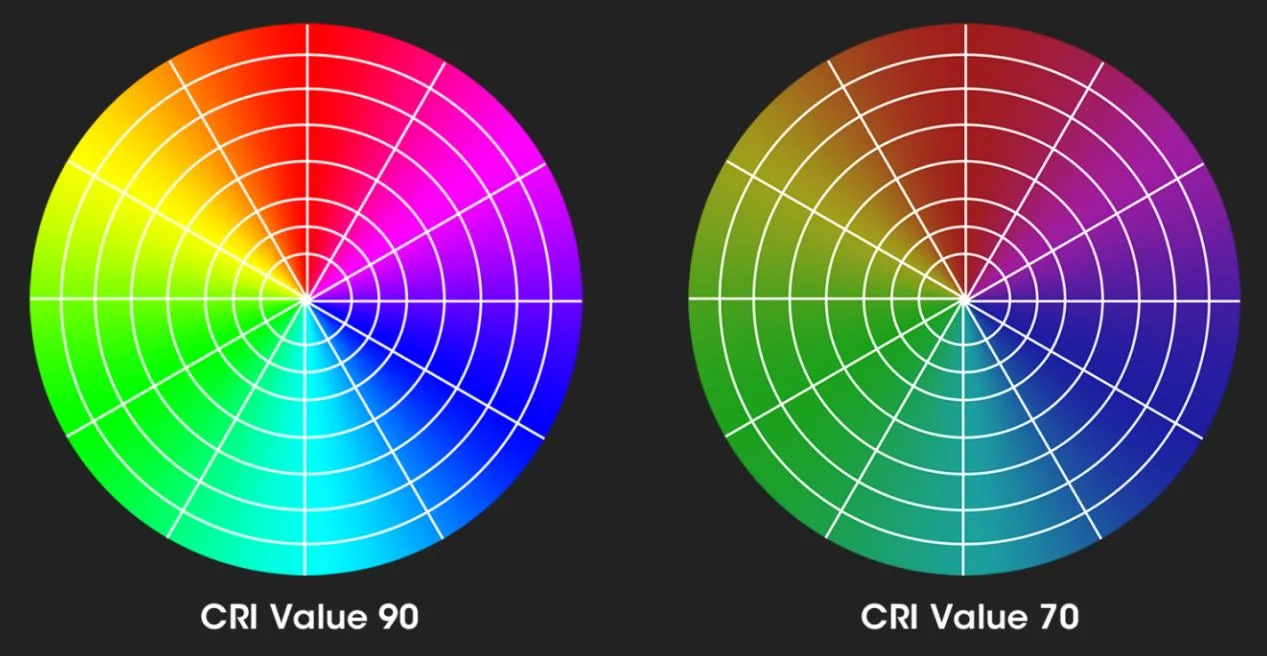
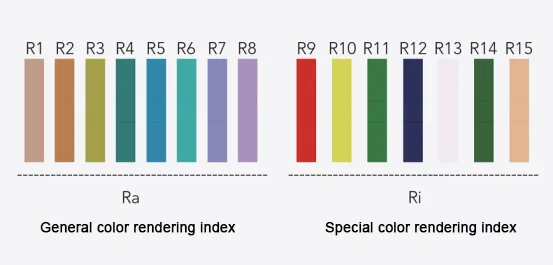
The general CRI value, often written Ra, summarizes the rendering result for a group of reference color samples. A higher value generally indicates closer color reproduction for those samples, but it does not specify how much light the strip emits. A high-CRI strip can be dimmer, brighter or more efficient than another strip depending on its emitters, current, density and optics.
- Keep CRI, lumens, watts per metre and CCT as separate fields.
- Ask whether the quoted value is measured for the exact strip variant.
- Do not use a high CRI number as a substitute for an output or thermal test.
CURRENT PRODUCT RECORDS
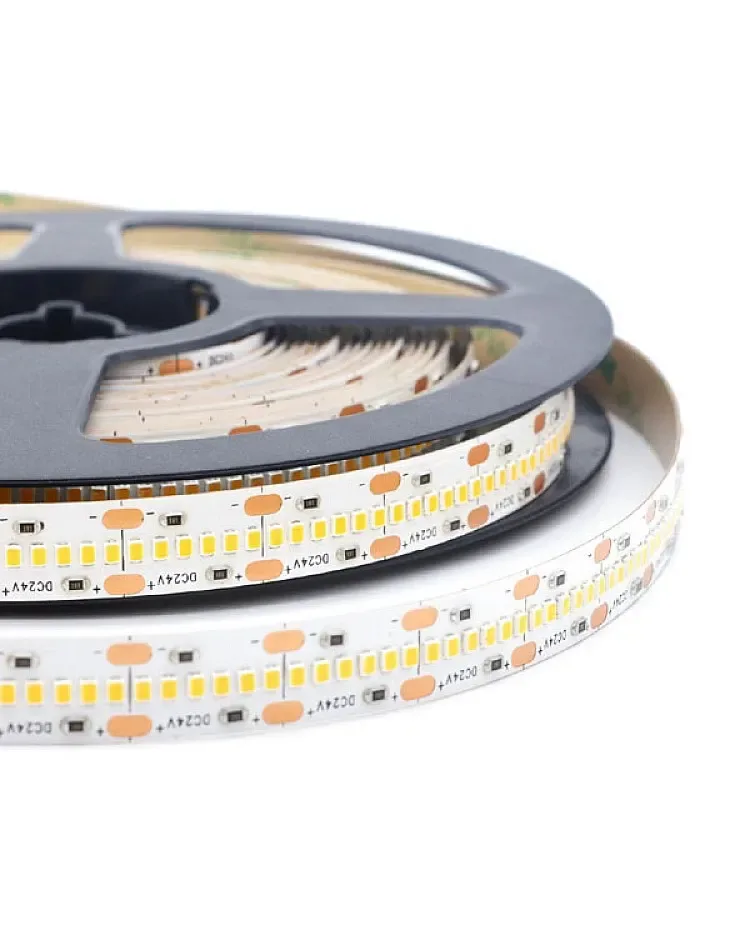
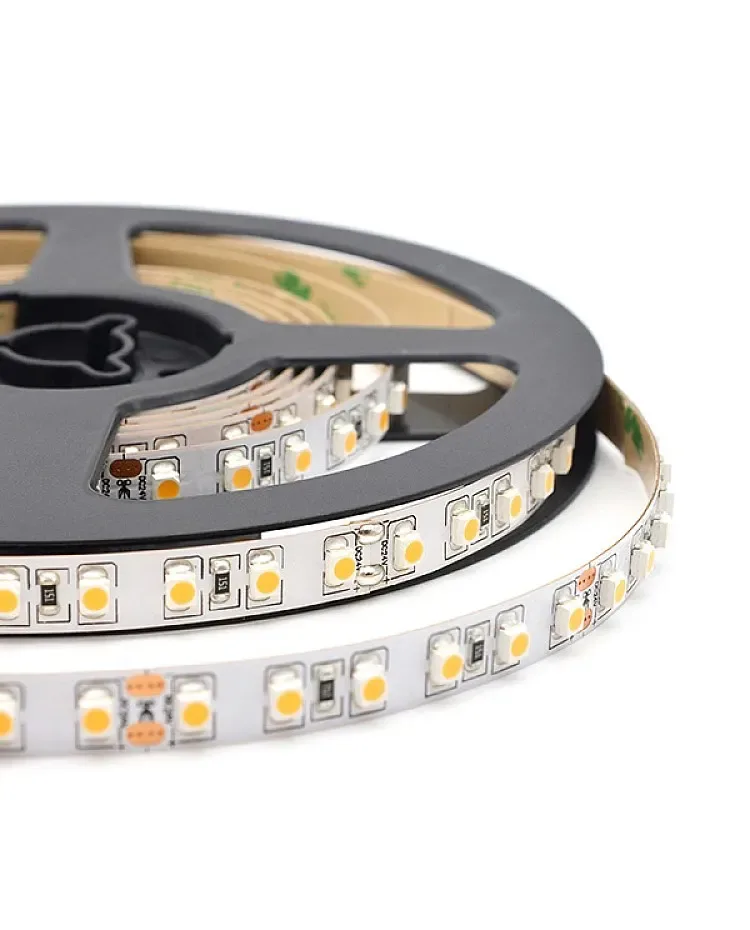
2216 CCT LED strip, 420 LEDs View product 3014 narrow dimmable CCT LED strip View productCHECKPOINT / 02
Understand why R9 can matter
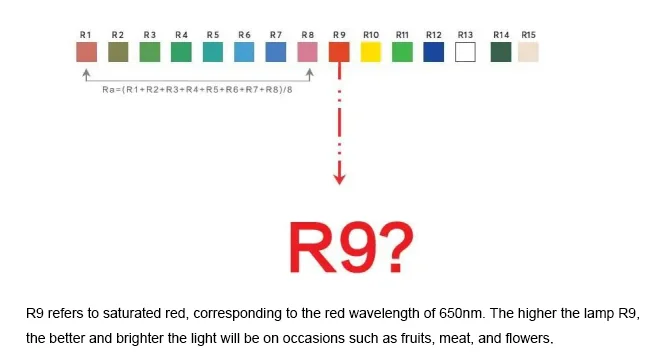
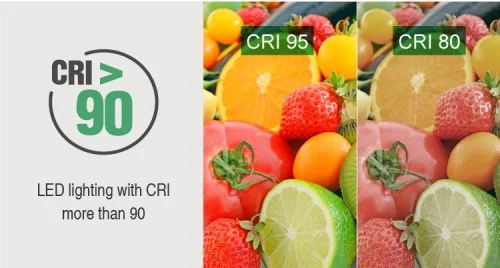
The general index does not tell the whole story for every object. R9 is one special rendering value associated with saturated red, which can matter for food, skin, art, textiles and products containing strong red tones. A light can have a respectable Ra while still rendering a specific color poorly. Choose the metric from the object and verify the result under the final optical assembly.
- Use R9 as an additional question for red-sensitive applications.
- Consider the spectrum and measurement method, not only one headline number.
- Evaluate food, skin or product samples in the actual room.
CHECKPOINT / 03
Keep CCT and flicker in the same brief
Color temperature tells you whether the light appears warm, neutral or cool; it does not establish color fidelity. Flicker behavior, dimming frequency, diffuser transmission and camera response are also separate decisions. A retail or grooming brief may need high rendering, a particular CCT and a stable dimming floor. Write those requirements together so a strong CRI number cannot hide a poor user experience.
- Specify CCT tolerance and CRI or R9 requirement separately.
- Test the dimming range with the chosen controller or driver.
- Check the light through the cameras and surfaces used in the project.
CURRENT PRODUCT RECORDS
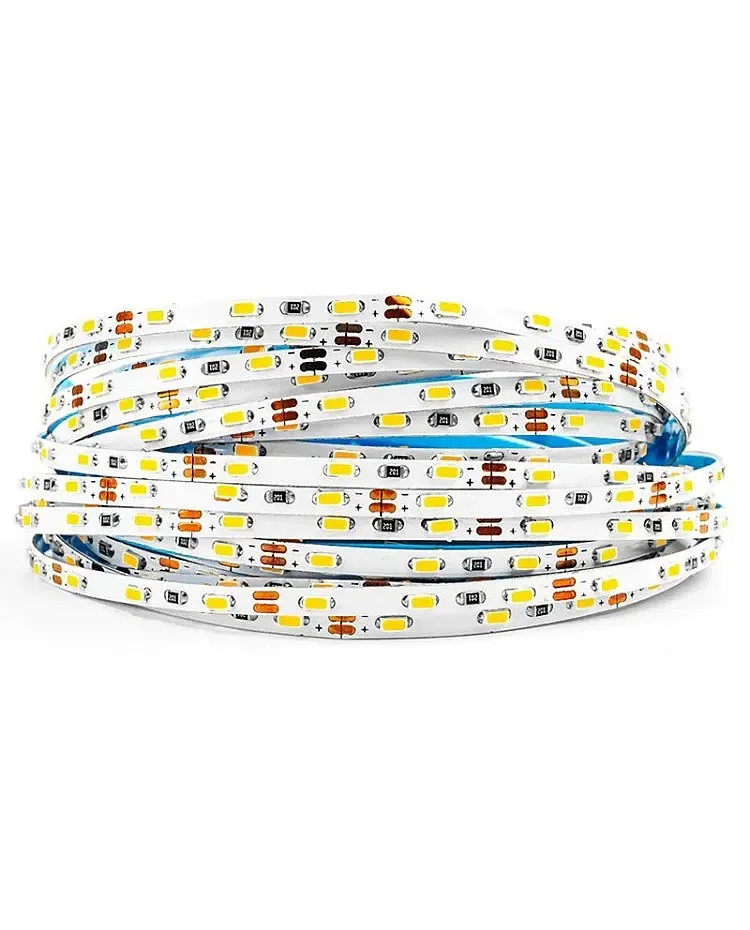
2216 CCT LED strip, 420 LEDs View product 2835 flexible CCT LED strip View productCHECKPOINT / 04
Compare the finished optical stack
A strip sample in open air is not the same as a strip inside a profile with an opal or clear diffuser. The cover changes transmission, color appearance and hotspot visibility, while the wall or object changes the perceived result. Put the candidate strips side by side at the same drive level and viewing distance. Record the exact product, CCT, diffuser, drive level, measurement source and acceptance notes.
sample = strip + profile + diffuser + surface
compare = Ra + R9 + CCT + flicker + output
approve = color_match && sightline_comfort && thermal_margin
CURRENT PRODUCT RECORDS
2216 CCT LED strip, 420 LEDs View productCHECKPOINT / 05
Ask for evidence that matches the use
A product page may list CRI, but the useful evidence is the test method, tolerance, CCT bin and exact variant. For critical color work, supplement the data with a measurement or a controlled visual comparison. For ordinary ambient lighting, a documented target and sample may be enough. Keep the claim proportionate: a source specification is a reference until the configured assembly is checked.
- Record the test report or measurement reference with the product variant.
- Do not generalize a CRI value from one CCT to every CCT option.
- Recheck after changing the strip, cover, driver or dimming method.
VISUAL REFERENCES
See the layers before you specify the parts.
FAILURE MODES
What usually goes wrong
- CRI is treated as a lumen, efficiency or lifetime rating.
- A high Ra value is accepted without asking about R9 for a red-sensitive application.
- CCT and flicker requirements are omitted because the CRI number looks strong.
- An open-strip sample is approved even though the final diffuser changes the color and uniformity.
- A CRI value from one CCT or source variant is generalized to the whole product family.
TECHNICAL BASIS / VERSION
Keep the decision current
This guide is maintained as a versioned technical record. Recheck the current protocol documentation and the exact product revision before using it in a production installation.
Confirm the selected voltage, light engine, driver, controller, firmware and installation conditions against the product record and project brief.
FAQ / QUICK ANSWERS
Common questions about this lighting setup
Is a higher CRI always better?
A higher value can indicate better reproduction of the reference colors, but the best choice also depends on the object, CCT, output, flicker, diffuser, cost and evidence for the exact variant.
What is R9 in LED lighting?
R9 is a special color-rendering value associated with saturated red. It can be useful for food, skin, art and product displays where red tones matter.
Does high CRI mean the LED strip is brighter?
No. CRI and brightness are different properties. Compare lumens or measured output, watts, CCT, spectrum and the complete optical assembly separately.
READING LIST
Reference points used for this guide
The page is rewritten for LumaCircuit readers. These references establish the original topic or technical context; they do not replace an exact product review or a LumaCircuit test record.
- Reference / CRI, R9 and the finished optical assembly