01 / Short answer
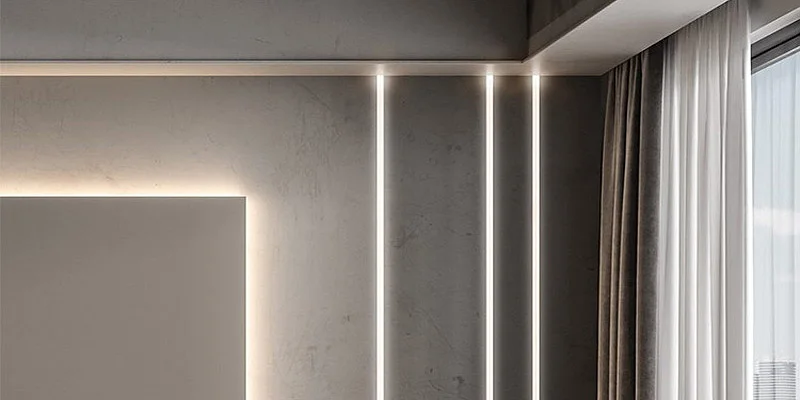
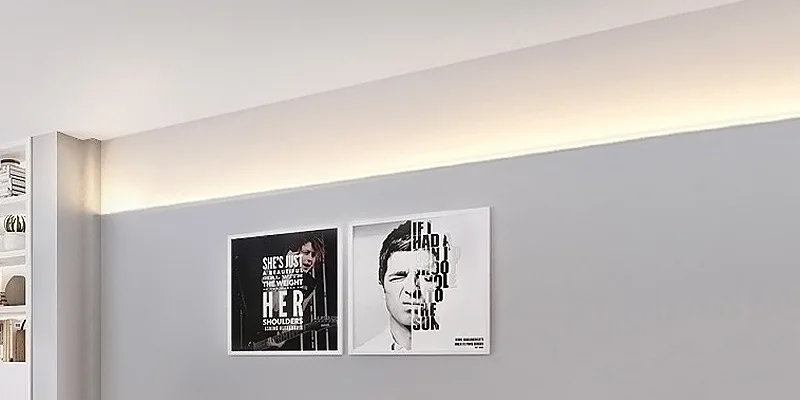
Direct light puts the source or beam on the wall and can reveal texture, objects and imperfections. Indirect light hides the source and lets the wall, ceiling, setback and diffuser shape a softer wash. Choose the optical effect first, then detail the profile, CCT, power and service path.
Architects, interior designers and installers choosing a direct wall line, grazing effect or reflected wall wash
CHECKPOINT / 01
Name the wall job before choosing the fixture
A wall may need useful task light, a calm background wash, a texture-revealing graze, wayfinding or a feature line. Direct light places more of the source or beam in view and can emphasize a surface; indirect light reflects from a wall or ceiling and can integrate more quietly into architecture. A spotlight, flexible strip and recessed profile each create different edges and shadow behavior.
- Write the required visibility, atmosphere and feature hierarchy.
- Mark the normal viewing positions and the places where glare is unacceptable.
- Decide whether the wall finish should be revealed or visually softened.
CURRENT PRODUCT RECORDS
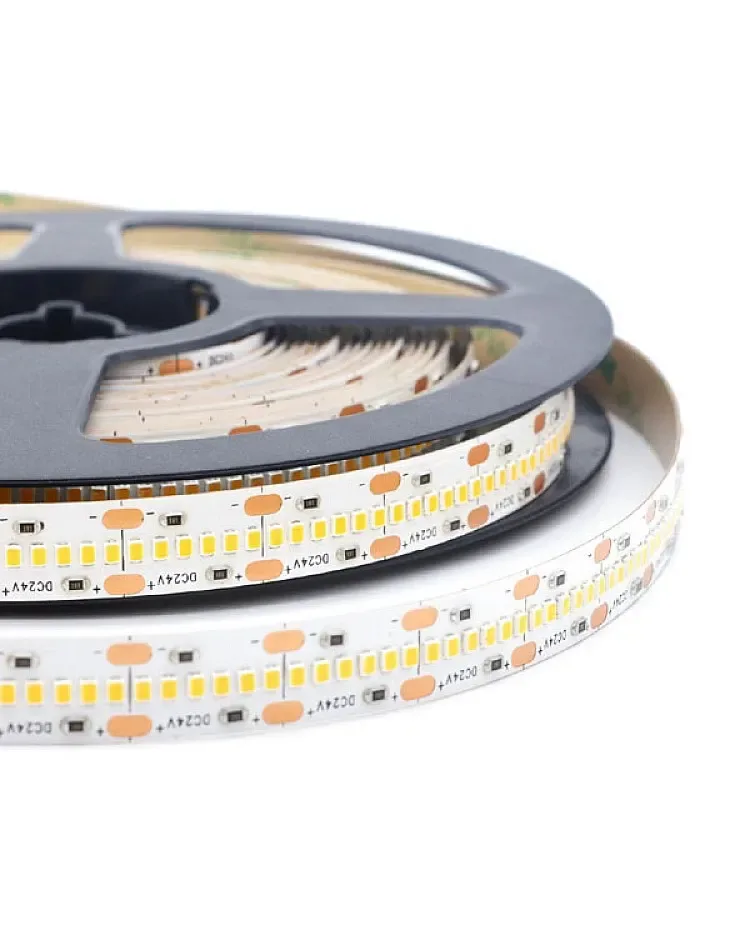
2216 CCT LED strip, 420 LEDs View productCHECKPOINT / 02
Use setback and surface to shape indirect light
The distance between the source and the wall changes the spread, gradient and visibility of the fixture. A close source can graze texture and expose imperfections; a deeper setback can create a broader wash but needs more cavity space. Ceiling reflection, wall color, paint sheen and obstacles all affect the result. Measure the cavity and test a short section before fixing the entire line.
- Record source-to-wall distance at the tightest and widest points.
- Check the wall and ceiling reflectance with the actual finish.
- Leave room for the profile, diffuser, cable and service access.
CURRENT PRODUCT RECORDS
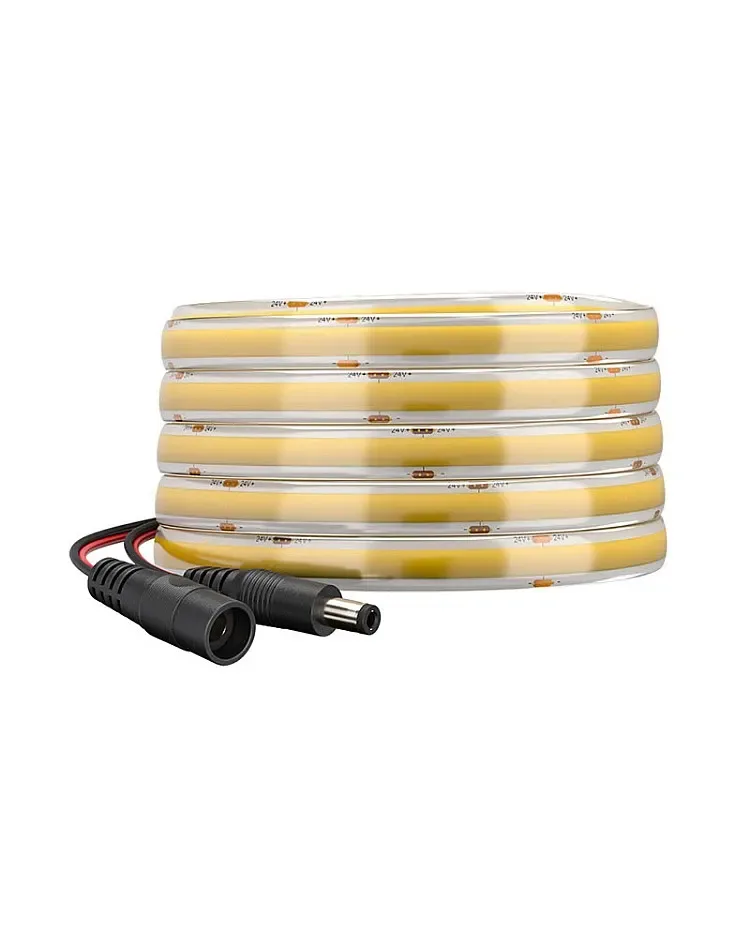
IP65 COB CCT LED strip View productCHECKPOINT / 03
Control glare with the profile and diffuser
A channel can hide the strip, provide a thermal carrier and set the direction of the light. A clear cover preserves more output but may show emitter points; an opal or diffused cover conceals the source at the cost of some transmission. For a direct wall line, use the diffuser and viewing angle to keep the source out of the eye. For a wash, aim and setback usually matter more than simply increasing power.
- Compare clear and diffused covers at the real sightline.
- Check hotspots where the wall is closest to the source.
- Do not use a high-power strip to compensate for a poor optical position.
CURRENT PRODUCT RECORDS
IP65 COB CCT LED strip View productCHECKPOINT / 04
Coordinate CCT, color and power architecture
Warm, neutral and cool white can change how a wall finish reads, while RGB or RGBW can create a separate effect layer. Keep CCT, CRI, brightness, voltage, watts per metre and control method as separate decisions. Calculate the run, choose the supply and distribute power through serviceable branches. If a wall line joins a corner or ceiling, maintain the same channel, diffuser and cable logic through the transition.
wall_load_w = watts_per_m * energized_length_m
branch_a = wall_load_w / voltage_v
optical_check = setback + diffuser + surface_reflection
approve = branch_a && service_access && optical_check
CURRENT PRODUCT RECORDS
2216 CCT LED strip, 420 LEDs View product 100 W IP67 LED power supply View productCHECKPOINT / 05
Approve the surface effect from the room
Build a mock-up with the final strip, profile, diffuser, wall finish and control level. View it from standing, seated and passing positions, then inspect texture, shadow, color, flicker and the transition to adjacent light. Test the full branch at maximum planned brightness and leave a record of the setback, CCT, strip variant, supply, controller, dimming floor and maintenance path. The wall is part of the luminaire.
- Compare direct and indirect samples without changing the drive level invisibly.
- Check the wall for imperfections before committing to a close graze.
- Keep the profile and driver accessible for cleaning and replacement.
CURRENT PRODUCT RECORDS
2216 CCT LED strip, 420 LEDs View productVISUAL REFERENCES
See the layers before you specify the parts.
FAILURE MODES
What usually goes wrong
- Direct and indirect lighting are described without defining the viewer and wall job.
- The source-to-wall setback is not measured until after the profile is installed.
- A clear cover is used where the eye sees emitter points, or an opal cover is used without recalculating output.
- CCT and RGB scenes are chosen without coordinating brightness, power, cable and diffuser.
- The wall wash is approved from one photograph instead of a room-level mock-up.
TECHNICAL BASIS / VERSION
Keep the decision current
This guide is maintained as a versioned technical record. Recheck the current protocol documentation and the exact product revision before using it in a production installation.
Confirm the selected voltage, light engine, driver, controller, firmware and installation conditions against the product record and project brief.
FAQ / QUICK ANSWERS
Common questions about this lighting setup
What is the difference between direct and indirect wall lighting?
Direct lighting sends the source or beam visibly onto the wall or object. Indirect lighting hides the source and uses reflection from the wall or ceiling. The best choice depends on the task, finish, sightline and desired atmosphere.
How far should an LED strip be from a wall?
There is no universal distance. It depends on the strip, diffuser, brightness, wall finish and whether you want a close graze or broad wash. Mock up the exact setback in the final space.
Does indirect wall lighting need an aluminum profile?
A profile can provide heat spreading, alignment, diffusion and source concealment, but the required assembly depends on the strip power, cavity, optical goal and service plan.
READING LIST
Reference points used for this guide
The page is rewritten for LumaCircuit readers. These references establish the original topic or technical context; they do not replace an exact product review or a LumaCircuit test record.
- Reference / direct, indirect and finished wall-lighting assembly