01 / Short answer
Flexible and rigid linear lighting solve different physical problems. Flexible strip follows curves and changing lengths; rigid bars keep a straight geometry and can simplify alignment and heat spreading. The right choice follows the sightline, bend, cut, carrier and service requirements.
Designers and installers choosing between flexible strip, rigid linear bars and a protected profile assembly
CHECKPOINT / 01
Choose flexible strip for changing geometry
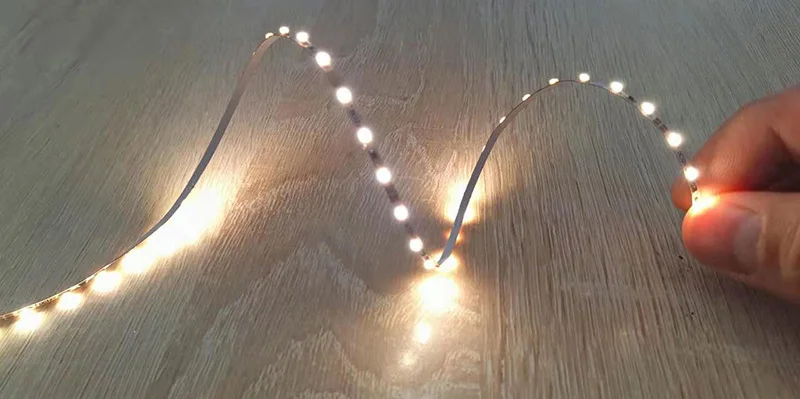
Flexible strip uses a bendable PCB and is useful around furniture, curves, coves, signs and irregular joinery. Its flexibility does not mean it can be folded sharply or twisted around its solder pads. Confirm the bend direction, minimum radius, coating and mounting surface. If the final light must look like one straight line, a flexible board may still need a channel or carrier for alignment.
- Measure the inside and outside bend radius in the installation path.
- Keep the strip flat in the direction its PCB is designed to bend.
- Add clips or a carrier when adhesive alone cannot hold the route.
CURRENT PRODUCT RECORDS
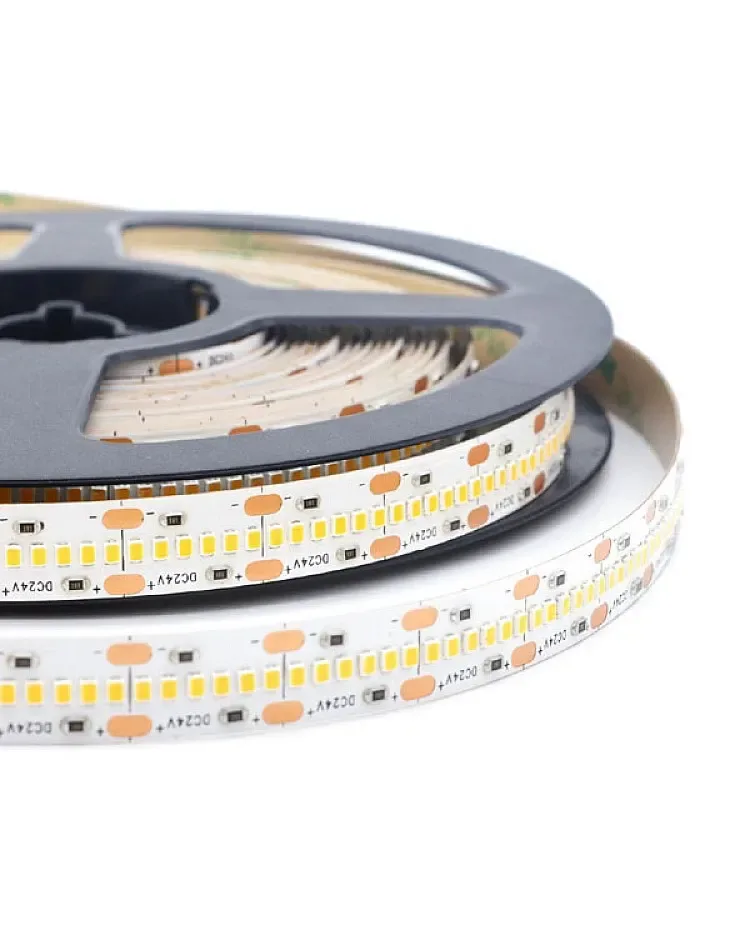
2216 CCT LED strip, 420 LEDs View productCHECKPOINT / 02
Choose rigid bars for repeatable straight lines
Rigid linear bars use a hard board or housing to preserve a straight, repeatable shape. They can be easier to align across shelves, cabinets or architectural modules, and an aluminum substrate may help spread heat. Their fixed length and connection points can make curves, tight corners or custom dimensions harder. Rigid does not automatically mean outdoor-rated or optically uniform; check the complete housing and diffuser.
- Record bar length, end connection and replacement access.
- Check whether the rigid body can be cut or only used in fixed modules.
- Verify the housing, diffuser and seal rather than assuming the word rigid means protected.
CURRENT PRODUCT RECORDS
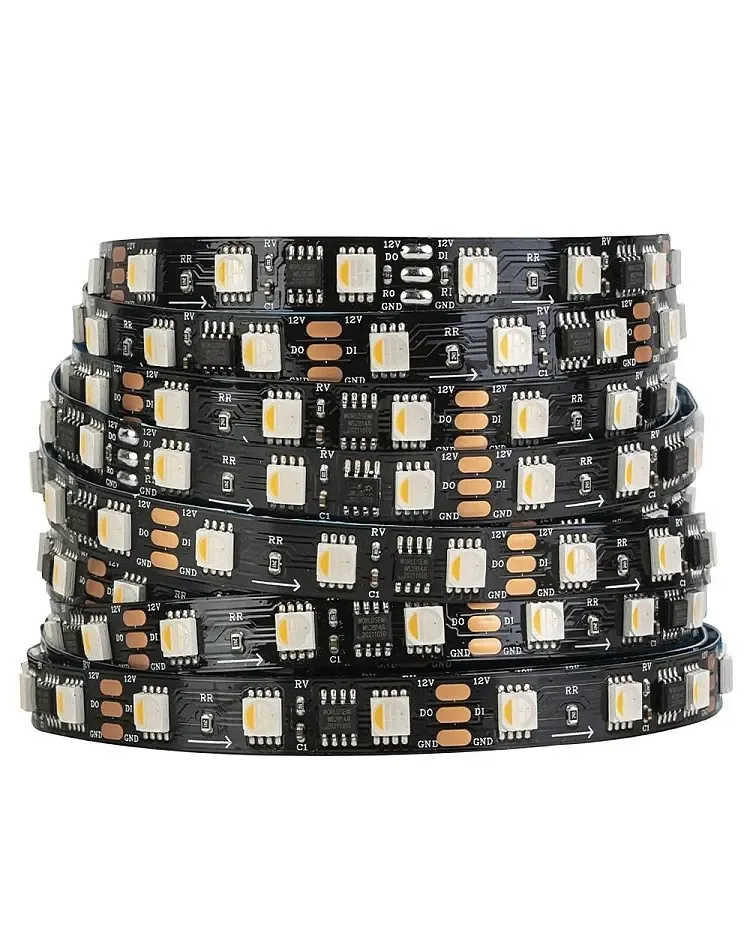
24 V WS2814 RGBW addressable LED strip View productCHECKPOINT / 03
Compare the assembled optical result
A bare flexible strip can show emitter points, while a profile and diffuser can make the line calmer and protect the board. A rigid bar may already contain an optical layer, but its beam and spacing still need to be judged from the real sightline. For a continuous line, compare the source, cover, setback, wall finish and viewing distance as a single sample. Do not choose from the strip shape alone.
- Check hotspots at the closest and most common viewing positions.
- Compare direct, diffused and reflected light on the actual finish.
- Keep color quality and CCT separate from flexible or rigid construction.
CURRENT PRODUCT RECORDS
2216 CCT LED strip, 420 LEDs View productCHECKPOINT / 04
Make heat and wiring part of the form factor
The light engine, watts per metre, carrier, cable and ambient temperature determine the thermal path. Flexible strip may need a conductive profile; a rigid bar may have its own heat path but still needs clearances and a matched supply. Check cut intervals, cable exits, connectors and branch current before the line is enclosed. The cleanest shape is not useful if its joint cannot be serviced.
fit = bend_radius + cable_exit + diffuser_clearance
load_w = watts_per_m * energized_length_m
serviceable = access_to_joint && access_to_supply
CURRENT PRODUCT RECORDS
100 W IP67 LED power supply View productCHECKPOINT / 05
Select the format from the maintenance plan
Use flexible strip when the project benefits from custom length, curves or a replaceable continuous reel. Use rigid bars when straight modules, repeatable spacing and fast alignment matter more than arbitrary length. In either case, retain a service loop, a documented connector and a replacement path. Approve a short sample at the final brightness, diffuser and mounting surface before specifying the whole run.
- Record the exact cut or module replacement interval.
- Test the line after the cover and end caps are installed.
- Store an offcut, spare bar or interface record for future repair.
CURRENT PRODUCT RECORDS
2216 CCT LED strip, 420 LEDs View product 24 V WS2814 RGBW addressable LED strip View productVISUAL REFERENCES
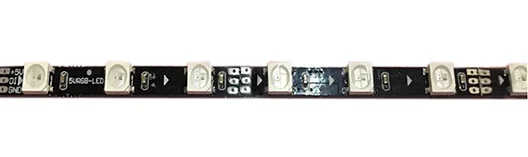
See the layers before you specify the parts.


FAILURE MODES
What usually goes wrong
- Flexible strip is folded beyond its bend direction or minimum radius.
- Rigid bar length and end connections are discovered after the furniture is built.
- A diffuser or housing is assumed to solve hotspots without a sightline sample.
- The form factor is selected without checking watts, carrier contact, cable exit or service access.
- Rigid housing is treated as proof of waterproof or outdoor suitability.
TECHNICAL BASIS / VERSION
Keep the decision current
This guide is maintained as a versioned technical record. Recheck the current protocol documentation and the exact product revision before using it in a production installation.
Confirm the selected voltage, light engine, driver, controller, firmware and installation conditions against the product record and project brief.
FAQ / QUICK ANSWERS
Common questions about this lighting setup
Are rigid LED bars brighter than flexible strips?
Not automatically. Output depends on the exact light engine, drive power, optics, color quality and thermal path. Compare the assembled products at the intended sightline.
Can flexible LED strip bend around a corner?
It can when the bend direction and minimum radius allow it. A sharp fold can damage the PCB or pads, so use a cut-and-join method or a suitable corner connector when required.
Does a rigid LED bar need an aluminum profile?
Some rigid bars include their own carrier or housing, while others do not. Check the exact thermal, optical, mounting and service requirements instead of assuming one form factor includes every part.
READING LIST
Reference points used for this guide
The page is rewritten for LumaCircuit readers. These references establish the original topic or technical context; they do not replace an exact product review or a LumaCircuit test record.
- Reference / localized technical tutorial