01 / Short answer
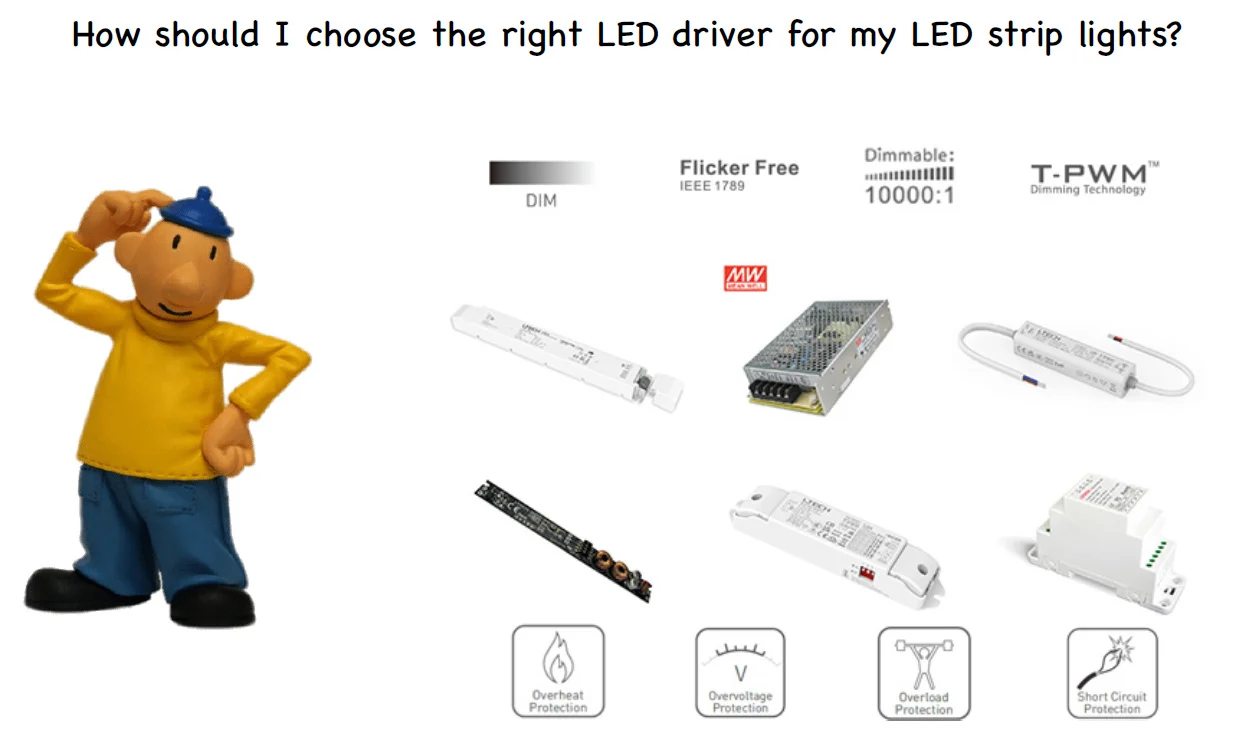
Constant current and constant voltage are different load topologies, not competing quality levels. Choose from the light engine specification first, then match voltage range, current, power, dimming and protection.
Anyone selecting a driver for LED strips, modules, linear fixtures or constant-current LED boards
CHECKPOINT / 01
Identify the load topology
A constant-voltage driver holds a nominal output such as 12 V or 24 V while the connected light assembly draws the current it was designed to draw. This is the usual topology for many LED strips and modules that include current-limiting resistors or onboard regulation. A constant-current driver regulates a specified current over a voltage compliance range for an LED string or board designed for that drive method. The labels are not interchangeable.
- CV load: match output voltage and keep total current within the driver rating.
- CC load: match output current and confirm the LED forward-voltage range.
- Read the exact light-engine record before selecting the driver type.
CURRENT PRODUCT RECORDS
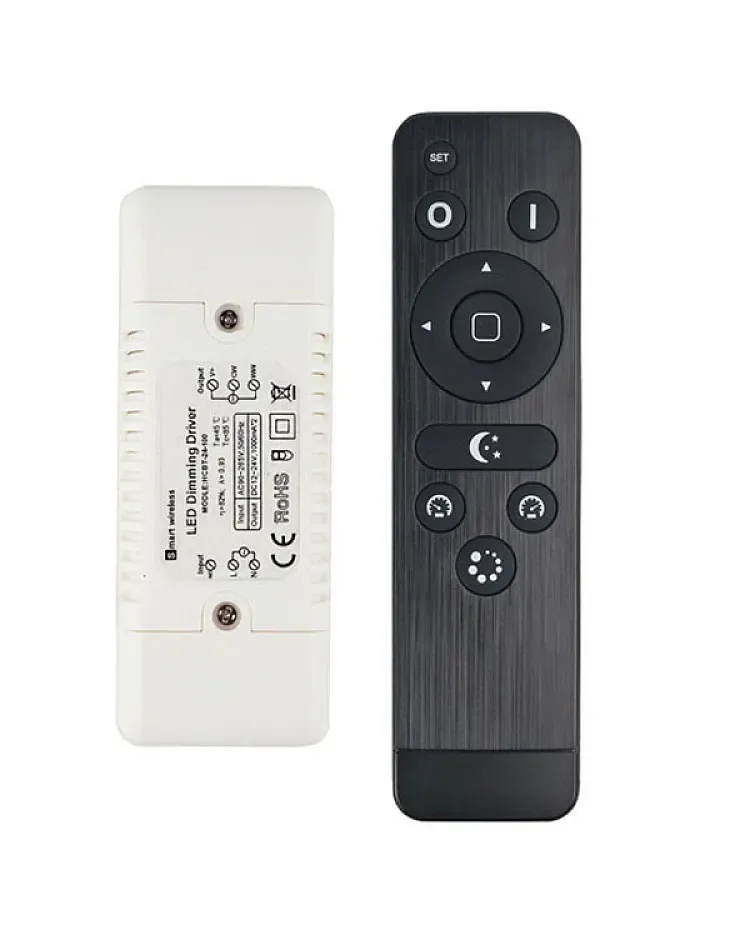
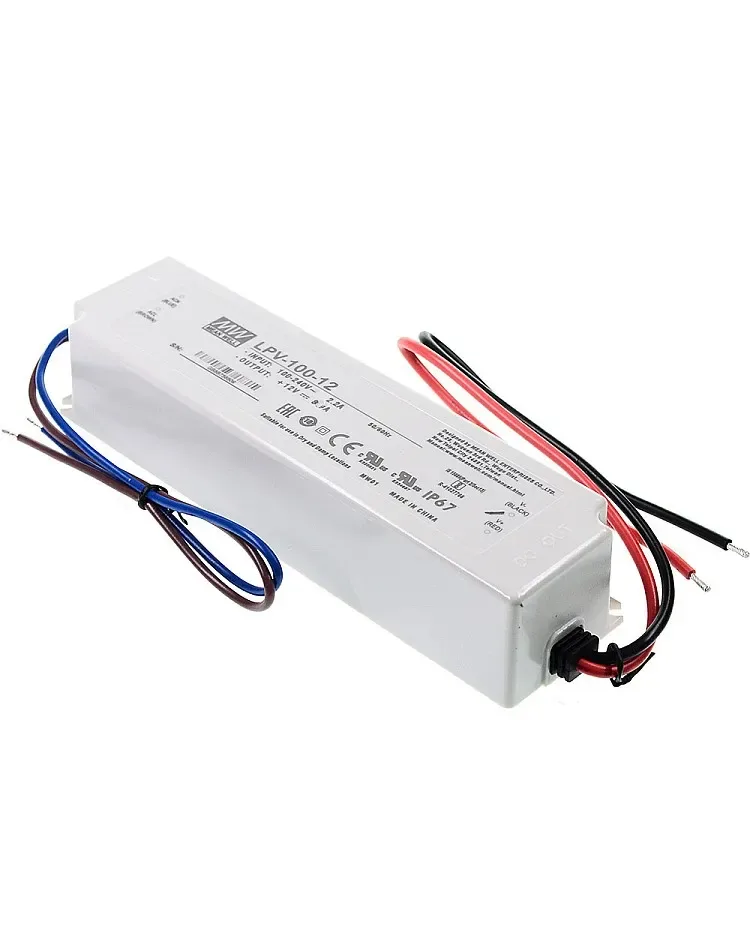
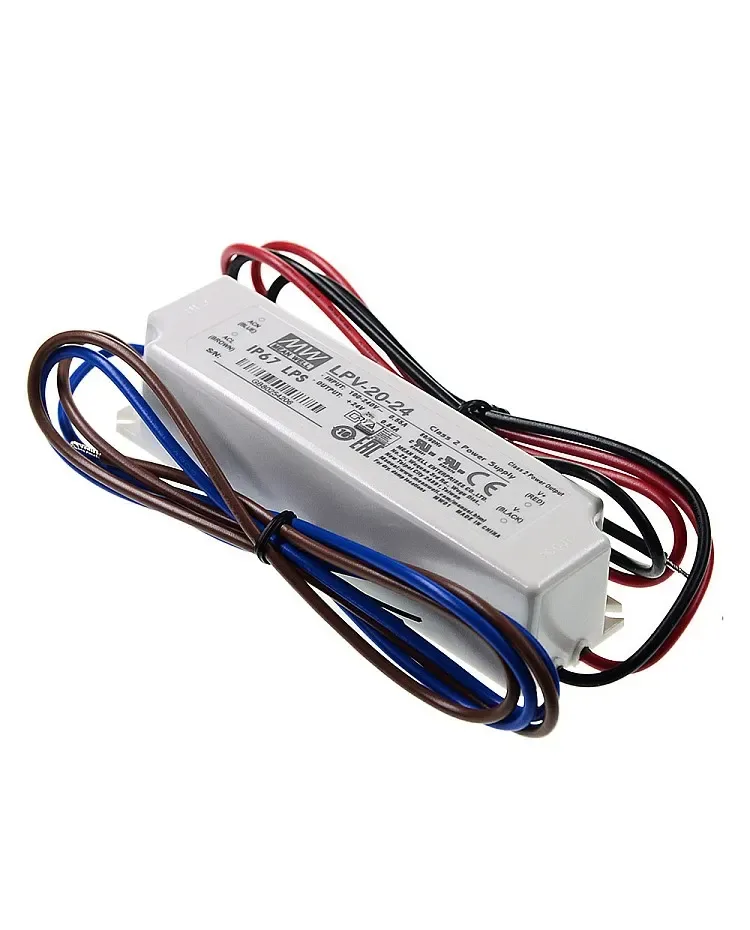
100 W IP67 LED power supply View product Constant Current CCT Dimmable LED Driver View productCHECKPOINT / 02
Do not choose the driver from wattage alone
Wattage is the result of voltage multiplied by current; it does not tell you the correct topology. A constant-voltage strip can be damaged or behave unpredictably when driven by an unmatched constant-current source. A constant-current LED board can be under-driven, over-driven or unstable when connected to a generic constant-voltage supply. Confirm the light source requirement, output range and minimum load before looking at headroom.
power_w = voltage_v * current_a
cv_current_a = load_w / supply_voltage_v
cc_driver: current_a + compliance_voltage_rangeCHECKPOINT / 03
Match dimming to the electrical interface
A PWM dimmer commonly modulates a constant-voltage strip, while a constant-current driver may accept a specific PWM, 0-10 V, DALI, TRIAC or current-reduction control input. These interfaces are not universal. An addressable strip adds a data controller but still needs a supply matched to its voltage and load. Verify channel count, minimum dimming level, control polarity, isolation and controller limits before wiring.
- Use a documented PWM path for a constant-voltage strip.
- Use only the dimming input supported by the selected constant-current driver.
- Keep data, low-voltage power and mains control boundaries clear in the wiring record.
CHECKPOINT / 04
Treat thermal behavior as a system check
A correctly regulated current does not remove the need for a heat path. LED junction temperature, driver enclosure temperature, cable losses and ambient conditions still affect reliability. Constant-current control can prevent one type of current increase in a suitable LED string, but it cannot compensate for a blocked heatsink, an over-loaded branch or a driver installed in a heat pocket.
- Provide the LED board or fixture with the specified thermal interface.
- Check driver ventilation, ambient temperature and enclosure access.
- Measure the real load and temperature after the installation reaches a stable state.
CURRENT PRODUCT RECORDS
Constant Current CCT Dimmable LED Driver View product 100 W IP67 LED power supply View productCHECKPOINT / 05
Commission the exact driver and light together
Start with the light engine disconnected from the final finish and verify polarity, output behavior and control input. Add the load gradually, test the maximum intended state and record voltage, current, dimming range, temperature and restart behavior. The current catalog includes both power-supply and driver families; each is a configuration reference until the exact light, driver and control combination is reviewed.
identify: load_topology + voltage_or_current
verify: output + dimming + protection + thermal_path
record: light_variant + driver + controller + measured_resultVISUAL REFERENCES
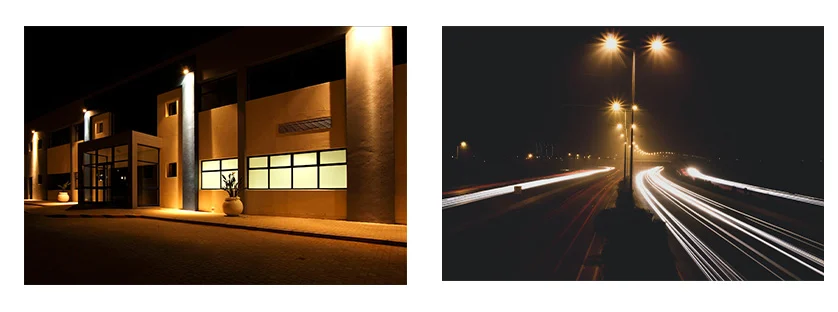
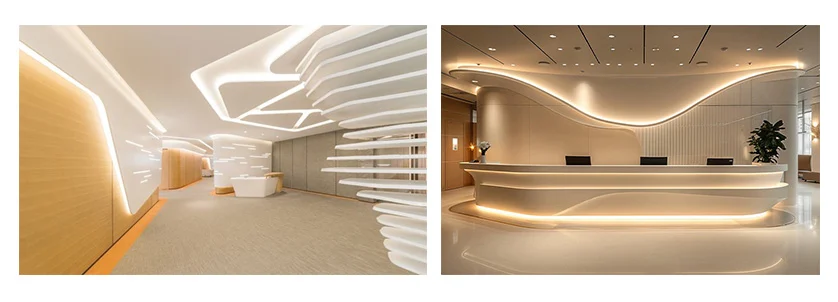
See the layers before you specify the parts.
FAILURE MODES
What usually goes wrong
- A constant-current driver is connected to a constant-voltage strip because both products have a similar wattage.
- A constant-voltage supply is connected to an LED board that requires current regulation.
- A dimmer interface is assumed to work without checking minimum load, polarity or isolation.
- A driver is sized by output power while its voltage compliance or current range is wrong.
- Thermal protection is treated as a substitute for a correctly sized heatsink, enclosure and branch.
TECHNICAL BASIS / VERSION
Keep the decision current
This guide is maintained as a versioned technical record. Recheck the current protocol documentation and the exact product revision before using it in a production installation.
Confirm the selected voltage, light engine, driver, controller, firmware and installation conditions against the product record and project brief.
FAQ / QUICK ANSWERS
Common questions about this lighting setup
Is constant current better than constant voltage?
Neither is universally better. Constant current is correct for a current-driven LED string or board; constant voltage is correct for a light assembly designed for a fixed voltage. The wrong topology can cause unstable operation or damage regardless of driver quality.
Can a 24 V LED strip use a constant-current driver?
Only if the exact strip is explicitly designed for that current-driven topology and the driver voltage compliance range matches the strip. Many 12 V and 24 V strips are constant-voltage loads and require a matched CV supply instead.
Does constant-current control prevent thermal runaway?
It can reduce current-related risk in a suitable LED load, but it does not replace thermal design. The LED board, driver, enclosure, ambient temperature and control level must all remain within their specified conditions.
READING LIST
Reference points used for this guide
The page is rewritten for LumaCircuit readers. These references establish the original topic or technical context; they do not replace an exact product review or a LumaCircuit test record.
- Reference article / constant-current and constant-voltage LED drivers